

An HFC network, also known as a Hybrid Fiber Coaxial Network, is a broadband network infrastructure that combines fiber optic and coaxial cable technologies to provide an efficient solution for the delivery of broadband services such as Internet, telephone and television.
Although FTTH is undisputedly the target architecture, HFC remains a powerful technology that is constantly evolving and enables high data transfer rates and reliable Internet connections for end users.
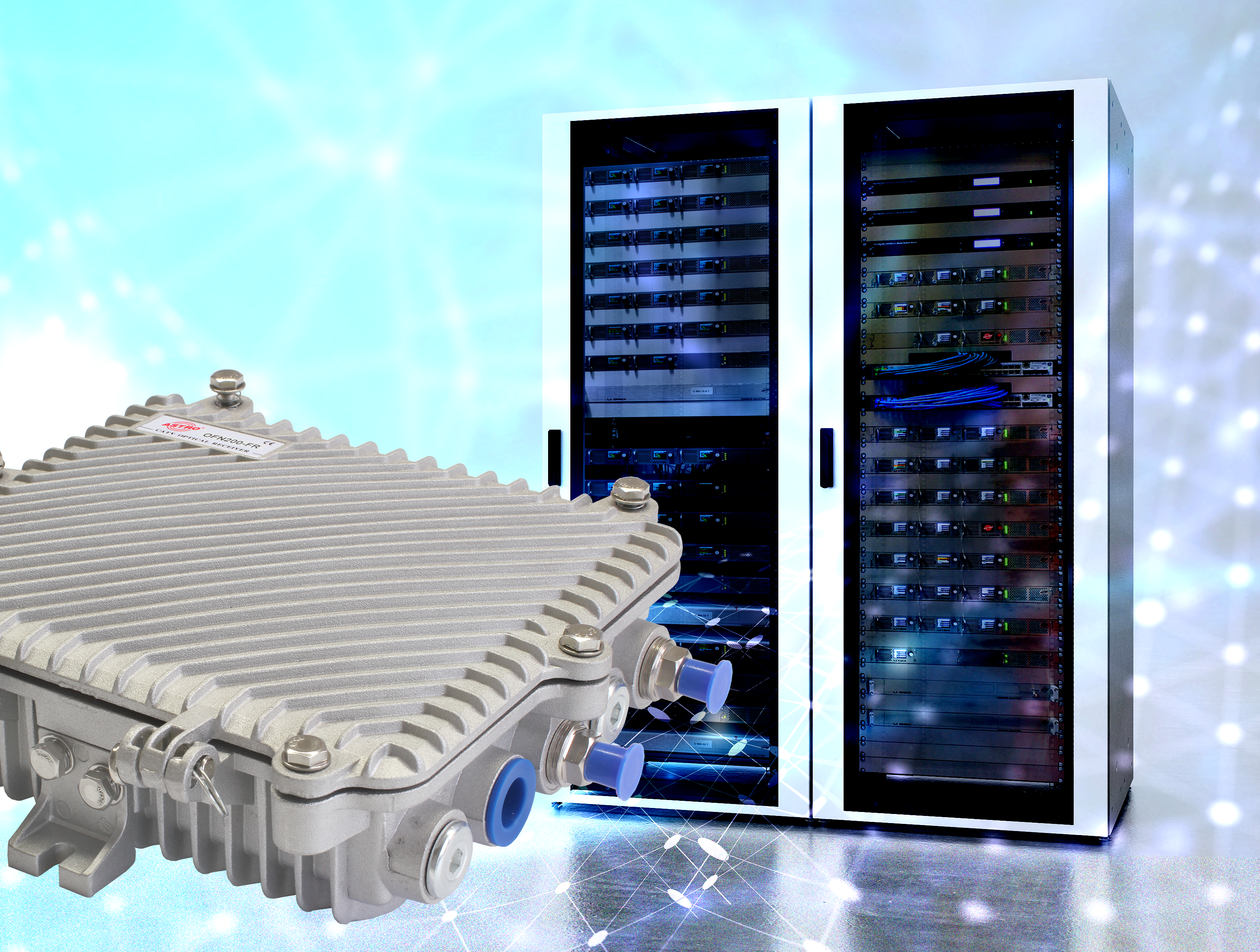
Fiber optic cables form the basis of the network and transport signals over long distances, while the last mile to the customer’s home is bridged with coaxial cable. The node at which the transition from fiber optic to coaxial cable takes place is usually located in a distribution box near the customer.

With the implementation of the DOCSIS 3.1 technology standard and the associated expansion of the transmission frequency range up to 1.2 GHz, HFC networks are becoming an important pillar in the further development of the gigabit society. For example, they can form the basis for modern “smart city” applications with a wide range of services for citizens and communities:
- Provision of TV supply, streaming and broadband internet (e.g. for video, gaming and home office applications)
- Networking sensors and cameras in public spaces
- Transmission of traffic data to optimize individual traffic
Our solutions include products that are required to exploit the full potential of your network through the DOCSIS 3.1 standard and increase data transmission rates for the end user to gigabits per second:
- Amplifiers
- Distributors and splitters
- Wall outlets
- Fiber nodes


Current cable fiber optic networks according to the DOCSIS 3.1 standard have a similar technical performance to the GPON fiber optic technology currently in use and, with the expansion of DOCSIS 4.0, will offer the same download rates as the GPON successor XGS-PON (10 GBit/s) in the future. This results in advantages:
- Balanced cost-benefit ratio: Compared to FTTH expansion (Fiber To The Home; optical fiber to the home/office), the investment in converting the HFC networks to DOCSIS 4.0 is significantly lower. The fiber optic expansion here is limited to the conversion of street amplifier points into fiber nodes and the replacement of components (e.g. splitters and amplifiers).
- With the further development to DOCSIS 4.0 and an expansion of the frequency spectrum to up to 1.8 GHz, the maximum download speed in HFC networks will increase to 10 Gbit/s and the upload speed to 6 Gbit/s.
For more HFC solutions, visit our partner company ASTRO Bit